
Every month, Indian businesses wrestle with PF ceilings, ESI thresholds, state-specific professional tax, changing TDS rules, and a stack of filing deadlines.
In 2026, the stakes climbed even higher because the new Labour Codes introduced a revised definition of “wages,” including a 50% rule that can affect how certain salary components are treated for statutory calculations.
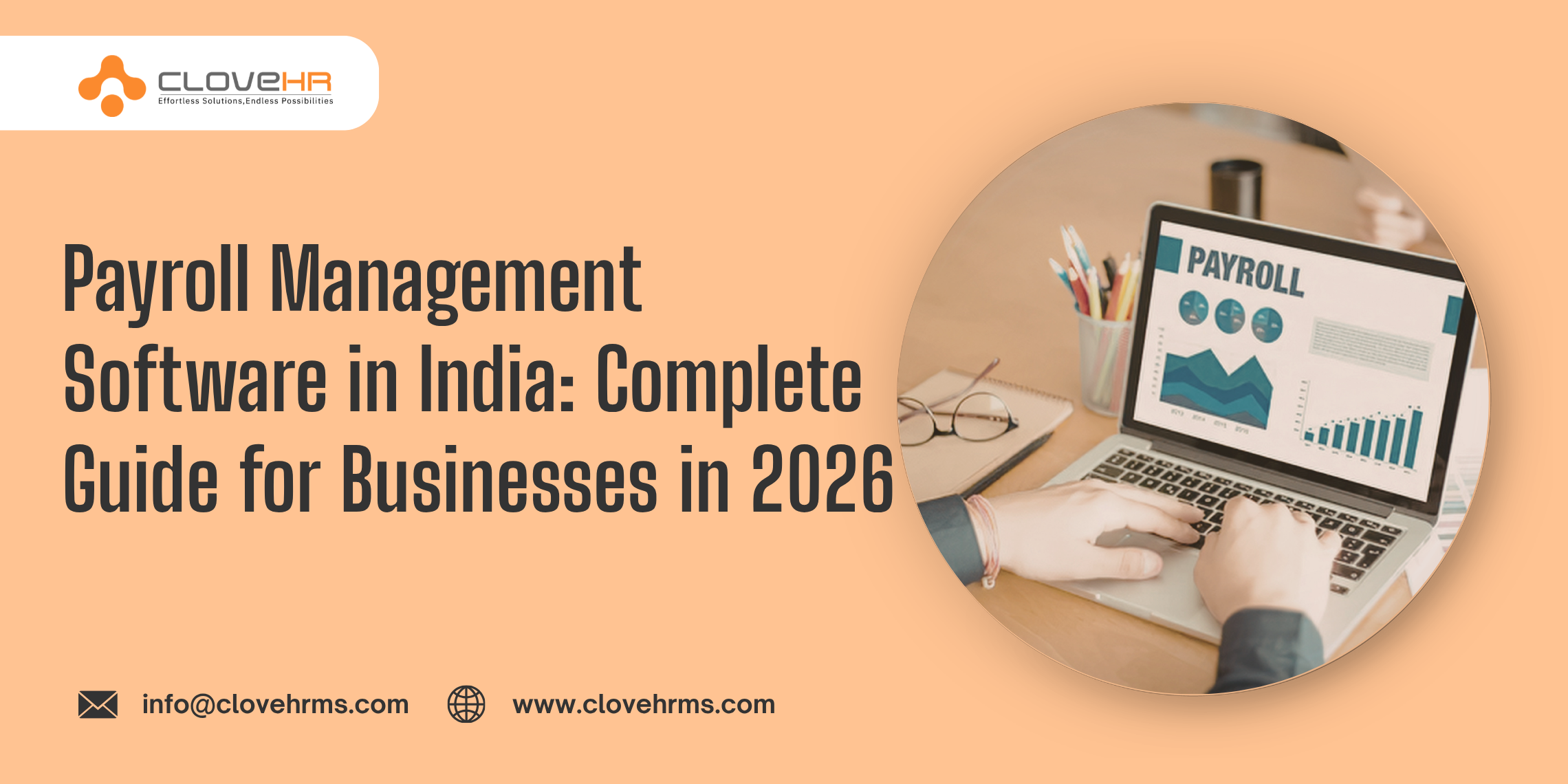
This is exactly the pressure that payroll management software in India is built to absorb. It automates salary calculations, statutory deductions, tax calculations, and compliance reporting from a single platform, helping businesses reduce manual errors, lower compliance risks, and pay employees accurately and on time.
This blog breaks down what the software does, which features matter most, how compliance works in 2026, and which platforms lead the market.
What Is Payroll Management Software?
Payroll management software is a digital solution that calculates employee wages, applies statutory deductions such as PF, ESI, professional tax, and TDS, generates payslips, and prepares compliance returns and reports. It replaces error-prone spreadsheets with an audit-ready system that handles the payroll cycle from calculation to reporting.
Most of India’s payroll software platforms cover three core functions: salary processing, statutory compliance, and reporting. The better ones go further, adding employee self-service, attendance integration, and automated checks that flag discrepancies before salaries are processed.
Why Indian Businesses Need Payroll Software in 2026
India processes payroll against one of the most complex regulatory frameworks in the world. Deductions and contributions vary by state, employee category, and the nature of employment, while rules and compliance requirements continue to evolve. Three developments make a payroll management system especially important in 2026.
- The New Labour Codes
All four Labour Codes came into effect on 21 November 2025, consolidating 29 central labour laws into four statutes covering wages, social security, industrial relations, and occupational safety. Detailed implementation continued through 2026 as the Central and State rules were notified, making it important for businesses to track state-specific requirements and regulatory updates.
- The 50% wage rule
Under the Code on Wages, specified allowances and benefits that exceed 50% of total remuneration are added back to “wages” for statutory purposes. This can increase the wage base used for calculations such as PF, gratuity, and bonus, requiring employers to review salary structures and recalculate their statutory liabilities.
- Gig and platform workers gain a formal social-security framework
The Code on Social Security establishes a framework for social-security schemes covering gig and platform workers and provides for contributions from specified aggregators. Businesses that engage gig or platform workers therefore need to understand whether these provisions apply to their workforce and how the associated obligations are calculated.
Manual payroll increases the risk of PF miscalculations, gratuity shortfalls, reporting errors, and missed compliance requirements. A well-configured payroll processing software can automate statutory calculations, apply updated rules, and reduce the risk of errors as regulations change.
Key Features to Look for in a Payroll Management System
Prioritize these capabilities when evaluating any payroll management software in India:
- Automated statutory compliance: The system should calculate PF, ESI, professional tax, LWF, TDS, and gratuity, while generating statutory reports, Form 16, and Form 24Q or the applicable filing formats. Look for workflows that minimize manual data entry and support filing requirements.
- Multi-state compliance: Distributed workforces trigger different state-level rules. The system should apply the appropriate professional tax and Labour Welfare Fund rules based on employee location and jurisdiction.
- New Labour Codes readiness: Look for support for the revised definition of wages and 50% rule, configurable salary structures, electronic statutory registers, and efficient full-and-final settlement workflows. The 2026 Central Rules explicitly allow required registers to be maintained electronically.
- Attendance and leave integration: Connecting attendance and approved leave data directly to payroll reduces manual reconciliation and helps prevent errors in working days, overtime, deductions, and salary calculations.
- Employee self-service: Payslips, tax declarations, investment proofs, reimbursement claims, and other payroll documents should be accessible through web or mobile self-service, reducing routine HR queries.
- AI and automation: Advanced platforms can flag unusual payroll patterns, automate routine checks, assist with tax calculations, and answer common employee payroll questions through AI-powered assistants.
- Strong data security: Role-based access controls, encryption, audit trails, secure hosting, and controlled permissions are essential for protecting sensitive salary and employee information.
Important Note: The Income Tax Act 2025 changes the numbering from FY 2026–27 onward: Form 16 becomes Form 130 and Form 24Q becomes Form 138. A good payroll system should support the transition between the old and new forms.
Top Payroll Software in India for 2026
There is no universal winner or any single top payroll software in India. The right choice depends on company size, geographic footprint, existing HR stack, and whether you prefer a payroll-only specialist or a unified HRMS. The table below maps leading platforms to their best-fit segments.
| Platform | Best For | Type |
|---|---|---|
| CloveHR | Startups to enterprises wanting a customizable, modular cloud HRMS with payroll | Customizable cloud HRMS and payroll |
| greytHR | SMBs and mid-sized firms | Compliance-focused payroll and HR |
| Zoho Payroll | Businesses in the Zoho ecosystem | Cloud payroll |
| RazorpayX Payroll | Startups needing automated disbursal | Businesses prioritizing automated payroll, salary disbursement and compliance. |
| Keka | Mid-market | Unified HR and payroll |
| HROne | Mid-market with managed-payroll needs | Full HRMS |
| ZingHR | Enterprises with 1,000+ employees | Unified HCM |
| Darwinbox | Large enterprises | Enterprise HCM suite |
| ADP India | Global compliance needs | Enterprise payroll |
For SMBs and Startups
Smaller teams often consider CloveHR, greytHR, Zoho Payroll, and RazorpayX Payroll. These tools deliver strong Indian compliance, transparent per-employee pricing, and fast setup, and several offer free tiers for small headcounts.
For Mid-Market Businesses
Growing companies typically evaluate CloveHR, Keka or HROne. These combine payroll with attendance, leave, and broader HR features on shared data, which improves accuracy and lowers total cost of ownership as headcount rises.
For Enterprises
Large organizations shortlist Darwinbox, PeopleStrong, ZingHR, or ADP India. These platforms deliver deep multi-state statutory payroll automation, native Labour Codes readiness, analytics, and the governance controls that 1,000-plus employee operations demand.
How to Choose the Right Payroll Management Solution
Match the platform to your operating reality rather than to a feature checklist. Answer four questions before you commit.
- How many employees and locations do you run?
Multi-state operations need strong state-specific compliance. Single-location SMBs can prioritize simplicity and price.
- Do you want payroll only or a unified HRMS?
Payroll-only tools win on depth and cost for smaller teams. Unified platforms win on data flow and total cost of ownership at mid-market and enterprise scale.
- How ready is the platform for the Labour Codes?
Confirm native support for the 50% wage rule, digital registers, and fast full-and-final settlement.
- What does support look like?
Evaluate onboarding, data migration, and whether managed payroll is available if your team lacks in-house expertise.
Benefits of Payroll Software for B2B Organizations
A payroll management solution delivers several practical operational benefits:
- Fewer manual errors: Automates salary calculations, deductions, allowances, and other payroll components to reduce calculation mistakes.
- Faster salary processing: Streamlines payroll calculations and salary disbursement, reducing the amount of manual work required each pay cycle.
- Simpler compliance: Automates compliance calculations, reports, and filing workflows to help businesses meet payroll and statutory requirements.
- Lower HR workload: Self-service portals let employees access payslips, tax information, leave details, and other payroll information without relying on HR for every request.
- Earlier error detection: Automated validation and checks can flag unusual values, missing information, or calculation discrepancies before salaries are disbursed.
- Better audit readiness: Centralized payroll records, reports, and calculation histories make it easier to review payroll data and prepare for audits.
- Easier regulatory updates: Payroll software can incorporate changes to tax rules, statutory deductions, and other requirements, reducing the effort involved in keeping manual payroll processes up to date.
- Lower compliance risk: By reducing manual calculations and providing automated checks, payroll software can help reduce errors that could lead to incorrect payslips, compliance issues, or penalties
Frequently Asked Questions
No single platform wins for every business. CloveHR suits companies wanting a customizable, modular cloud HRMS with payroll; SMBs also consider greytHR, Zoho Payroll, and RazorpayX Payroll; mid-market companies choose Keka or HROne; enterprises rely on Darwinbox, PeopleStrong, ZingHR, or ADP India.
Pricing usually follows a base-plus-per-employee, modular, or quote-based model. Modular platforms let you pay only for the features you use, several vendors offer free tiers for small teams, and enterprise platforms provide custom quotes.
Yes. Leading platforms include native wage-restructuring validation against the 50% rule, digital register generation, and automatic updates as central and state rules roll out through 2026.
Yes. Cloud platforms use bank-grade encryption, role-based access, and multi-factor authentication, making them significantly safer than spreadsheets stored on local devices.
Absolutely. Many of the top payroll software in India, including CloveHR, are built specifically for startups and SMEs, offering simple setup, modular pricing, and room to scale as the team grows.