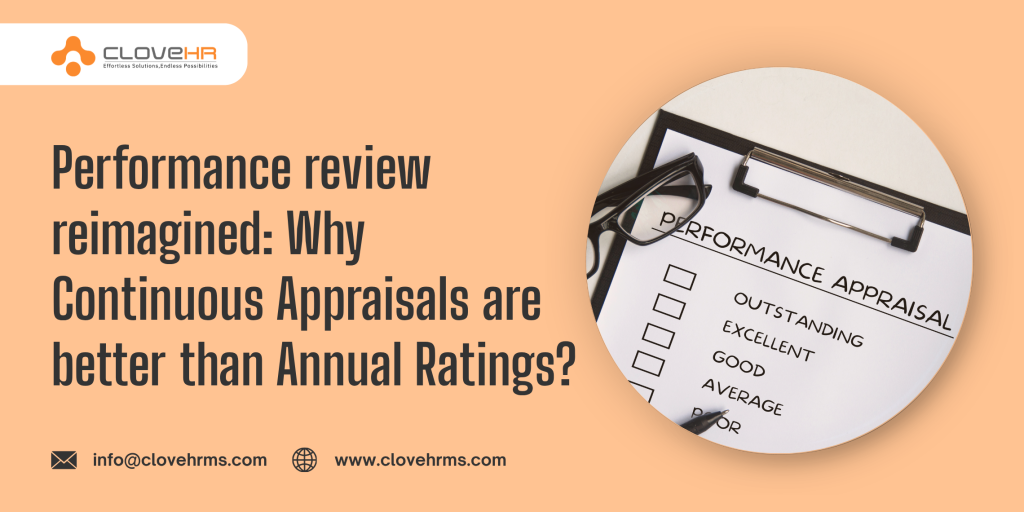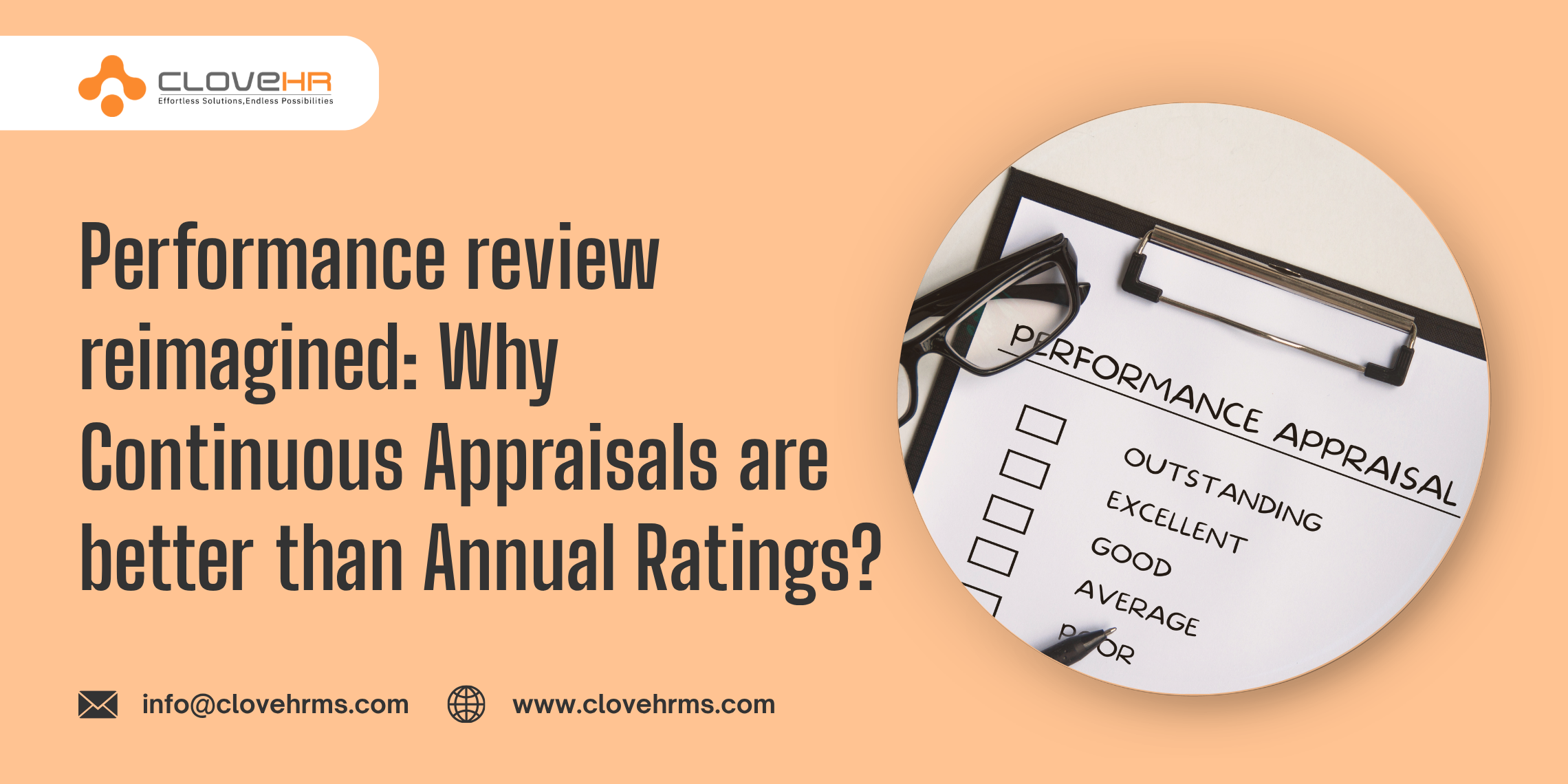

A few years ago, and even today too, annual performance reviews work as a cornerstone for the evaluation of the workplace. But, if you see today, it is going through a massive change because employees do not want to stress about one single judgment day for their whole year.
Just not employees, but managers too struggle to understand all the work done by an employee in just a day. For the new workforce and tech driven world, continuous appraisal promises real time recognition, coaching and alignment that changes performance reviews into one constant process that brings trust and agility to any business.
6 Ways Continuous Appraisals Outperform Annual Ratings
If you are wondering how constant appraisals outperform annual ratings then here are six powerful ways you should not miss:
Real‑Time Feedback Builds Agility
The wait for Annual reviews to know how employees were doing was real which always slowed down growth and created an environment of frustration. With Constant appraisal, employees get feedback in the moment where managers can highlight pros and cons so that employees can adjust instantly to not repeat mistakes for months.
For fast paced industries where focus shifts quickly, this agility is important and real time feedback also builds a culture of openness. No employees have to wait for a single judgement day, and can indulge in the bidirectional discussion anytime.
Recognition Becomes Ongoing, Not Delayed
One big flaw in annual reviews is how recognition keeps on facing postponements until the end of the year which is a long time between action and reward. It is because by that time impact fades, which makes employees feel undervalued.
This problem is solved by continuous appraisal which celebrates contributions as they happen. Whether it is about finishing a project, mentoring a colleague, or solving a client issue, recognition is sent in real time with HRMS boosts morale. It also builds a culture where appreciation becomes the daily work and not reserved for a single meeting.
Bias Reduction Through Multiple Data Points
Annual ratings often suffer from recency bias — managers tend to remember only the last few months of performance when filling out evaluations. This undervalues results and overlooks consistent contributions that are made earlier in the year.
Continuous appraisal solves this as it:
- Collects multiple data points across projects, timelines, and interactions.
- Provides a full performance journey instead of a single snapshot.
- Lowers favoritism and balances the viewpoints.
- Make sure about fair evaluation based on sustained effort, not isolated moments.
- Builds a culture of trust with holistic performance reviews.
Employee Development Is Continuous
You know what is annoying about annual reviews? It is that they feel like a final conclusion, a conclusion where mistakes are highlighted instead of the growth because it is the tendency of a human to remember mistakes more often than good works.
When you use constant appraisal, you have features like regular check-ins for managers to support employees in their skill building without them having to wait for the next annual review.
This regular guidance helps employees to refine their skills, know where they lack, and stay aligned with their overall career picture or goals.
Retention Improves Through Engagement
Most of the annual reviews leave employees feeling invisible for most of the year, only to be judged at the end which of course results in disengagement and turnover.
With continuous appraisal businesses can change the equation where they keep employees consistently engaged. For example, you can fix a regular feedback session at dates to show that employee contributions matter, which will ultimately keep them engaged.
As soon as employees feel they value and support them, they are far more likely to stay with the organization. In fact, continuous appraisal creates a cycle of trust because the science is that engagement drives retention, and retention makes team stability stronger.
Alignment With Business Goals
As soon as the time for feedback comes, even the goals and focus of the company shifts which leaves employees showing their success into outdated objectives.
With continuous appraisal you can keep performance connected with the growing strategies without missing the delivery of recognition that your team deserves during the point of time in a project. This results in a workplace where employees feel more connected to the main mission of the organization, and leaders get confidence that every contribution is actually taking the business forward to the goal.
Reimagine and Automate your Performance Reviews with CloveHR
Continuous appraisal is not just a philosophy so it needs the right system to make it practical.
CloveHR connects feedback into everyday workflows so that managers can share real‑time insights through dashboards, while employees receive recognition modules that highlight achievements instantly. With features like bias‑free analytics the tool promises evaluations on multiple data points, not just memory, and goal‑tracking features keep teams aligned with shifting priorities.
With the CloveHR Tool, businesses move from static ratings to dynamic growth, and build a culture where feedback, recognition, and development are continuous.
FAQs
With the right tools, feedback becomes a connected experience because you have automated reminders, dashboards, and templates that lowers the burden so the tool will be doing most of their work.
It gives coaching, skill development, and clarity on changing goals because employees get insights on which they can take actions to grow steadily without waiting months for feedback.
Yes, many organizations adopt continuous appraisal as the primary model. Some still keep a yearly summary for compliance, but the real value lies in ongoing dialogue.
With tracking of multiple data points across projects and timelines, CloveHR prevents recency bias and favoritism.
Yes, automation delivers consistency across teams, without their size barriers hence your approach remains seamless which is why its very practical for both startups and enterprises.